
The European adhesives and sealants market is undergoing a profound transformation, quietly yet decisively gaining ground against traditional mechanical fasteners across a multitude of industries.
Projected to expand from US$13.2 billion in 2022 to an estimated US$17.5 billion by 2030, at a compound annual growth rate of 3.6%, this expansion reflects not merely incremental growth, but a strategic re-evaluation of how products are assembled, perform, and ultimately, how they contribute to a sustainable future. For formulators in Europe, this evolving landscape presents both significant opportunities and complex challenges, necessitating an informed approach to material science, application technology, and regulatory compliance.
The ascendancy of adhesive bonding is rooted in its inherent technical advantages over conventional fastening methods. Unlike mechanical fasteners, which concentrate stress at specific points, adhesives distribute loads uniformly across entire bonded surfaces. This leads to superior structural integrity, enhanced fatigue resistance, and the mitigation of stress corrosion.
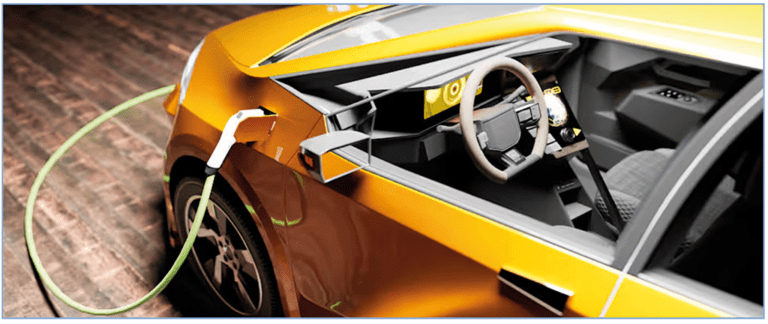
Furthermore, adhesives offer unparalleled design flexibility, allowing for the seamless joining of dissimilar materials, such as composites to metals, without the galvanic corrosion issues associated with bolting or riveting. The automotive sector, for instance, has embraced adhesive technology to achieve significant lightweighting, with some vehicles reducing weight by up to 15%.
This not only improves fuel efficiency but also enhances noise, vibration, and harshness (NVH) characteristics, contributing to a quieter and more comfortable ride. Examples such as BMW’s innovative use of adhesives for bonding carbon fibre reinforced polymer (CFRP) to aluminium in their i-series models, or Airbus’s extensive adhesive usage in the A350 XWB composite fuselage, underscore this transformative capability.
Adhesives also contribute to cleaner aesthetics, eliminating visible fasteners, and can act as effective seals against moisture, chemicals, and gases. From a manufacturing perspective, adhesive bonding often reduces production steps, lowers overall costs, and facilitates higher throughput.
A primary driver for this market evolution is the accelerating demand for lightweighting and electrification.
The imperative to reduce vehicle emissions and enhance range in electric vehicles (EVs) is pushing manufacturers towards lighter materials. Adhesives are often the sole viable method for bonding these advanced materials, including high-strength steels, aluminium alloys, magnesium, and carbon fibre composites. The European EV adhesives additives market alone is forecast for a staggering 24.41% CAGR between 2023 and 2032, highlighting the critical role these formulations play in battery pack assembly, thermal management, and structural integrity within electric drivetrains.
Parallel to this, the sustainability and circular economy agenda is profoundly influencing adhesive development.
The industry is consciously shifting from a ‘bond for life’ philosophy to a ‘bond for purpose’, where end-of-life considerations are factored into adhesive design. This has spurred innovations in bio-based, water-based, and UV-curable chemistries, significantly reducing mantevolatile organic compound (VOC) emissions and overall environmental impact.
The European Union’s ambitious targets for packaging recycling and the Ecodesign Regulation, which mandates design for repairability and recyclability in electronics and other products, are powerful legislative drivers.
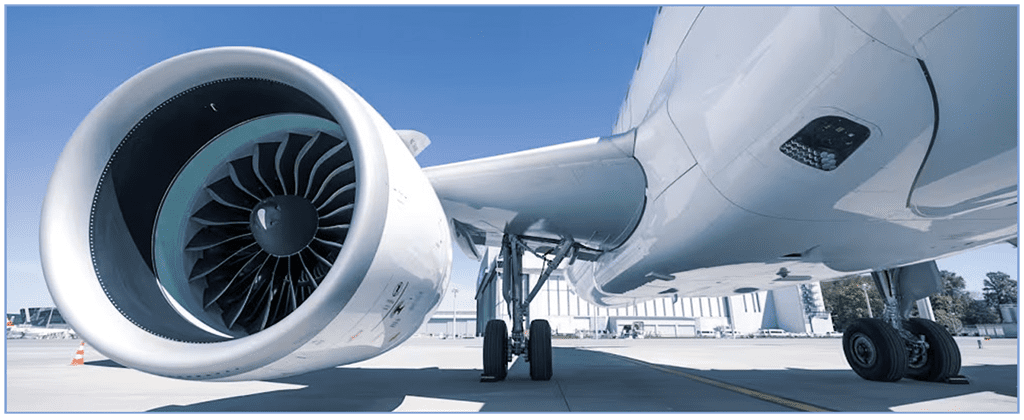
Central to this circularity push are reversible adhesives. These groundbreaking formulations enable products to be disassembled at their end of life, allowing for the recovery and recycling of valuable component materials. Technologies such as stimuli-responsive adhesives, which can be debonded using heat, light, or specific chemical agents, are moving from concept to commercial reality. For formulators, this means developing adhesives that not only provide robust performance during a product’s lifespan but also allow for efficient, clean separation when required, transforming waste streams into valuable resources. The increasing use of advanced composites across aerospace, automotive, wind energy, and construction sectors further cements the necessity of adhesive solutions. Adhesives are uniquely suited for bonding composites, which can be damaged by mechanical fasteners that introduce stress concentrations and fibre discontinuity. They preserve the structural integrity of composite laminates, offer exceptional fatigue strength, and provide superior shock absorption. While challenges related to surface preparation and cure times exist, continuous innovation in epoxy, acrylic, polyurethane, and silicone chemistries is providing formulators with a comprehensive toolkit to address diverse composite bonding requirements.
European initiatives, such as the AdTech project, are working to harmonise training and competencies in adhesive bonding technology to support this growth. Beyond material science, the industry is seeing significant advancements in tailored formulations and smart application methods. Artificial intelligence (AI) and machine learning are revolutionising adhesive research and development. By leveraging vast datasets, AI can predict material interactions and optimise formulations, drastically shortening product development cycles. This enables formulators to shorten the development process for highly customised adhesives for very specific performance requirements, such as those demanded by advanced electronics or complex EV battery designs. Furthermore, the efficiency of adhesive application is improving through automated dispensing systems and precision technologies.
Innovations like EcoStitch, which applies hot melt adhesive in precise dots rather than continuous beads, can reduce glue consumption by 35-70% while maintaining bond strength, contributing to both cost savings and a reduced environmental footprint. However, this dynamic environment is not without its complexities. Formulators continuously navigate raw material price volatility, with significant increases seen in critical components like epoxy resins. Strict European regulations, notably REACH (Registration, Evaluation, Authorisation and Restriction of Chemicals) and the VOC Directive, impose substantial compliance costs and require ongoing reformulation to eliminate or reduce hazardous substances. For instance, the restriction of certain chemicals and VOC directly impacts solventbased adhesive systems.
Furthermore, the complex interplay of material compatibility and the inherent performance limitations of some eco-friendly alternatives present ongoing technical hurdles. Despite these challenges, the trajectory is clear: the demand for high-performance, sustainable, and versatile adhesive solutions will only intensify.
In conclusion, the European adhesives and sealants market is not merely expanding; it is evolving as a strategic cornerstone of modern manufacturing.
The confluence of lightweighting demands, the electrifying shift in automotive, the imperative for circularity, and advancements in digital formulation and application technologies positions adhesives as indispensable enablers of future industrial innovation.
For adhesive formulators, the future lies in embracing these multifaceted trends, continuing to innovate with advanced materials, navigating the nuanced regulatory environment, and providing solutions that drive both performance and sustainability. The unseen revolution is here, and adhesives are leading the way.